
Can Your Roof Really Supply 100% of Your Home's Water?
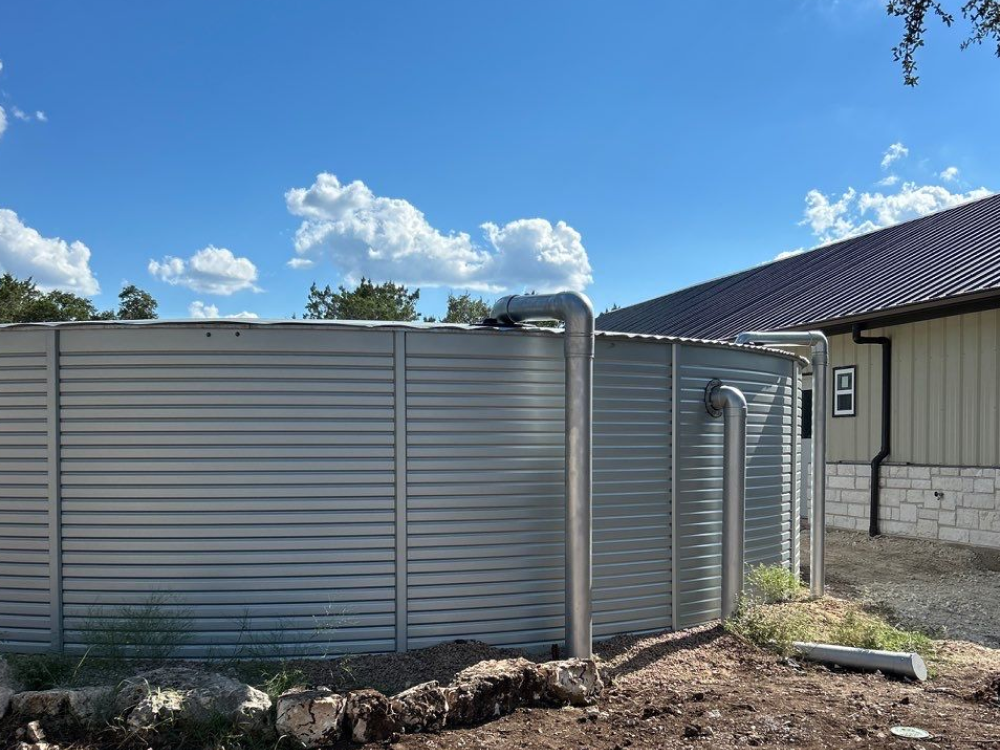
Short answer: yes. With the right roof, the right tank, and proper filtration, a home can run entirely on rainwater — for drinking, showering, laundry, dishes, everything. We've been doing it in Central Texas for 15+ years, and we're not the only place. It's the everyday norm in Australia, the standard way of life across much of Hawaii, and a growing practice even in the deserts of Arizona.
The longer answer is worth understanding, because "can it work" and "will it work for your house" are two different questions. The first one is settled. The second one comes down to a little bit of math and a few design decisions. Let's walk through both.
It's basically just an equation
Figuring out how much water your roof can collect, and whether it's enough for your family's needs, comes down to five inputs:
Rainfall — how many inches your location gets in a year.
Catchment surface — the square footage of your roof.
Catchment efficiency — the share you actually capture.
Storage tank — how much you can hold to carry you between rains.
Household use — how much water your home goes through each day.
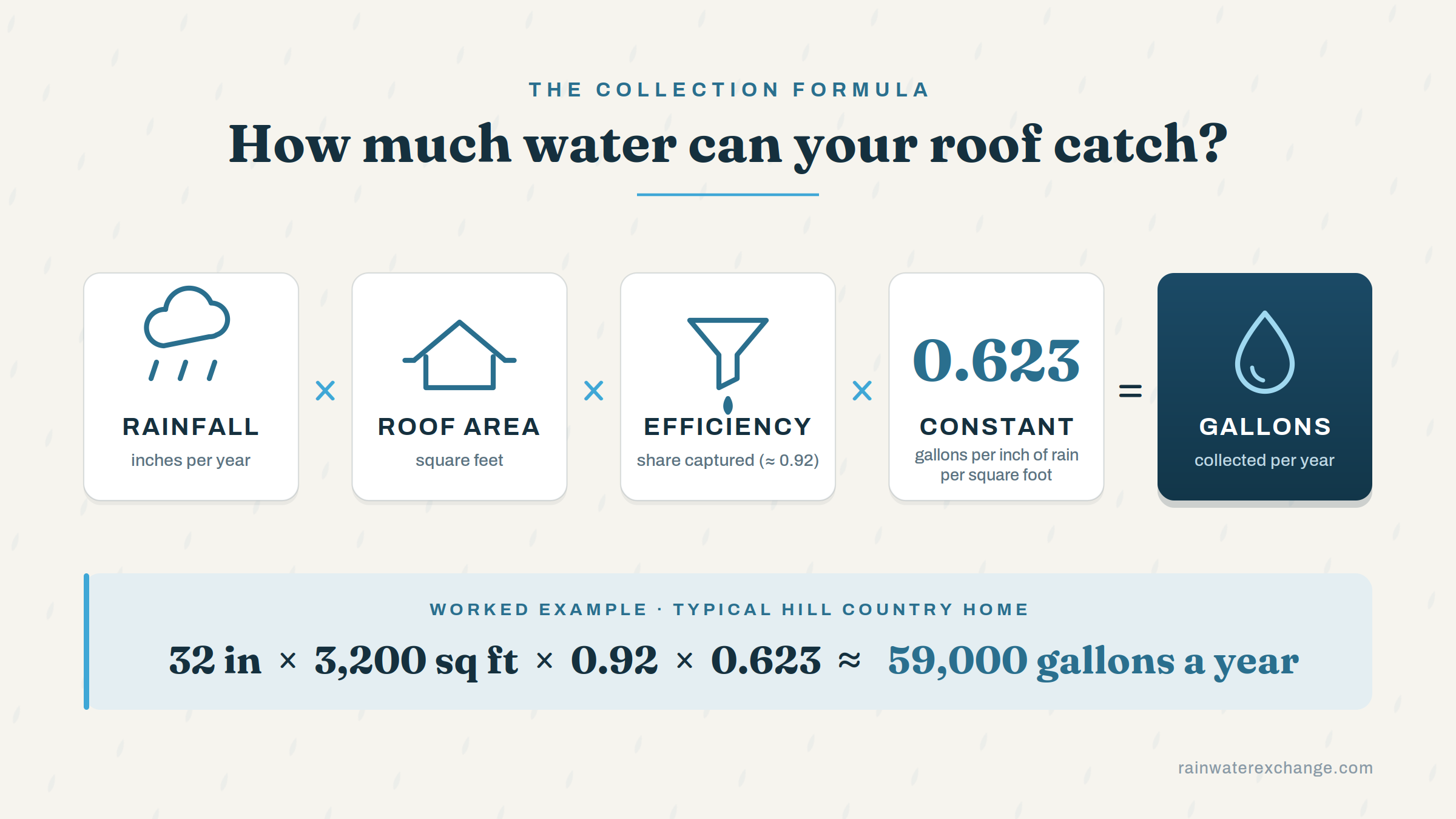
The first three tell you how much water you can collect. The collection formula is straightforward:
Gallons collected = Rainfall (inches) × Catchment Surface (square feet) × Efficiency × 0.623
That 0.623 is simply the conversion factor for how many gallons one inch of rain produces over one square foot. The last two inputs — storage tank and household use — tell you whether that collected water actually covers you year-round. Size all five together and you have your answer.
The Hill Country gets roughly 30 to 32 inches of rain a year. A 3,200-square-foot roof at that rainfall, after realistic efficiency losses, will catch somewhere in the neighborhood of 50,000 to 60,000 gallons a year. Even a single half-inch shower on a 1,000-square-foot roof puts around 300 gallons into your tank, and one inch on that same 3,200-square-foot roof is close to 2,000 gallons from a single rain.
For context, a careful household uses somewhere around 25 to 40 gallons per person per day, and rainwater homes tend to land on the lower end of that because people pay attention to water they can see in a tank. Do the math and the supply side usually wins, even in a dry year.
The science of "firm yield" — and the free tool that proves it
The Meadows Center for Water and the Environment at Texas State University studied exactly this question. Their 2025 report put the conclusion right in the title: Reliable Rainwater Is Only a Roof Away.
The key concept they used is firm yield — a term borrowed from formal water planning. Firm yield is the amount of water a system can deliver as a 100% reliable supply even under drought-of-record conditions. In other words, not "how much in a good year," but "how much can you absolutely count on in the worst stretch on record." That's the bar municipal reservoirs are judged against, and the Meadows Center applied it to ordinary household roofs.
To do it, researchers Dr. Robert Mace and Ricardo Briones built a free, spreadsheet-based tool called RAINFAL (the Rainwater Assessment and Interactive eNumerator for Firm-yield Analysis Limits). It models roof size, tank capacity, and daily household use against decades of real rainfall data, and they ran it for 19 locations covering every regional water planning area in Texas. You can try the RAINFAL calculator above or on the web interface, or download the Meadows Center's full version for your city from their research page.
Their findings line up with what we see in the field every day:
It works anywhere in Texas. With an appropriately sized roof and tank, a rainwater system can supply 100% of a household's needs even in the driest parts of the state, including El Paso.
Design matters more than geography. Reliability depends far more on roof size, tank capacity, and how much water you use than on where you live or how severe the local droughts are. Get the design right and the location matters much less.
Bigger roof plus bigger tank equals more reliability. Wet areas need less of both; dry areas need more. Either way, it's doable.
It doesn't drain rivers or aquifers. Even if every roof in Texas harvested rain, the reduction in runoff and recharge would be under 1% — a rounding error next to what pavement and development already divert.
That last point matters. Harvesting rain isn't taking water from anyone. It's catching water that was about to run off your roof and down the gutter anyway.
In Central Texas, this isn't an experiment
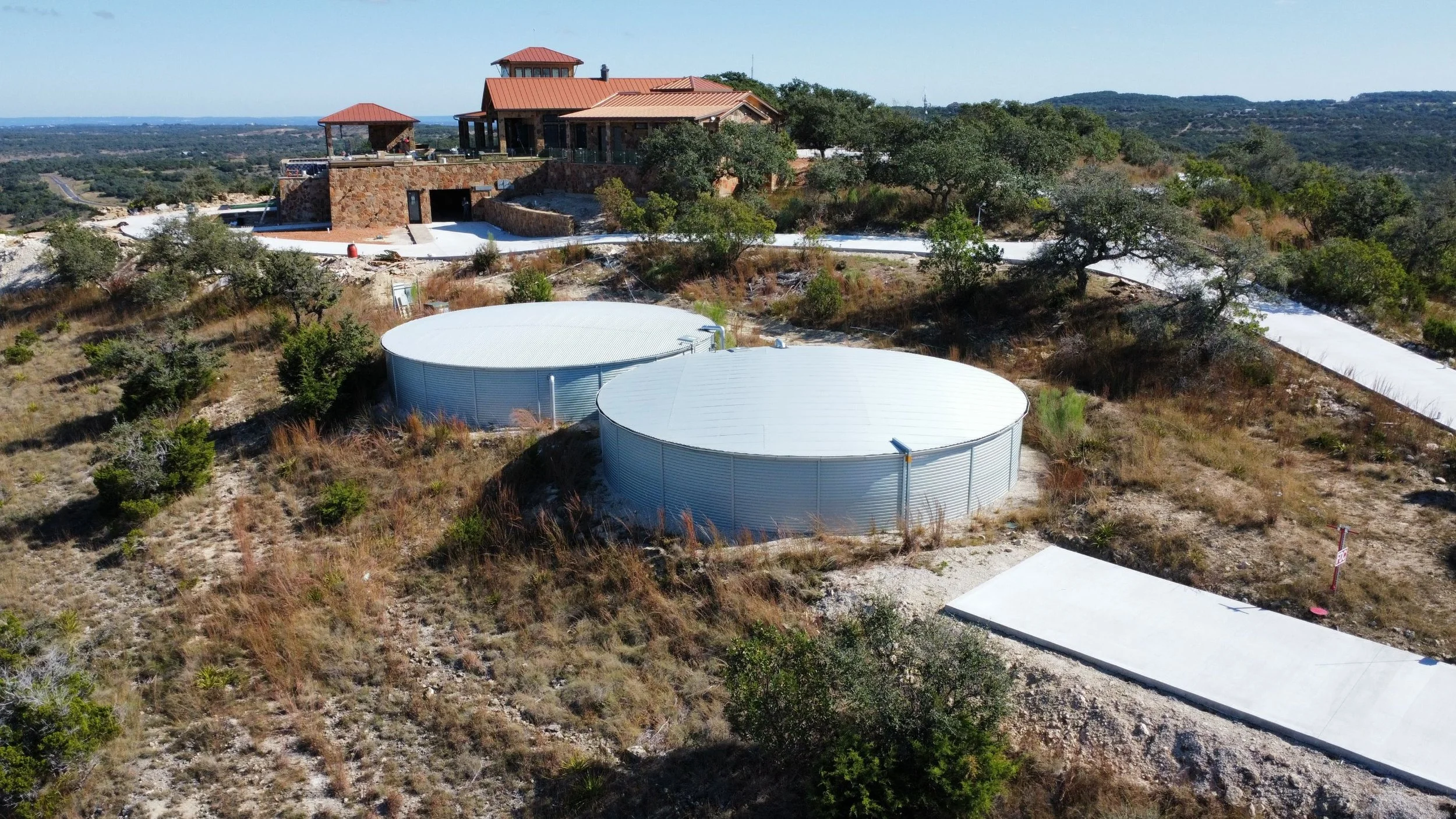
Tens of thousands of homes across Central Texas already run entirely on rainwater as their sole source — no well, no city line, just a roof and a tank. In the Hill Country, where the Trinity and Edwards aquifers are under real strain and a new well can cost $30,000 to $60,000 with no guarantee of hitting good water, rainwater isn't a fringe choice. It's often the practical one.
It's already the standard in Australia
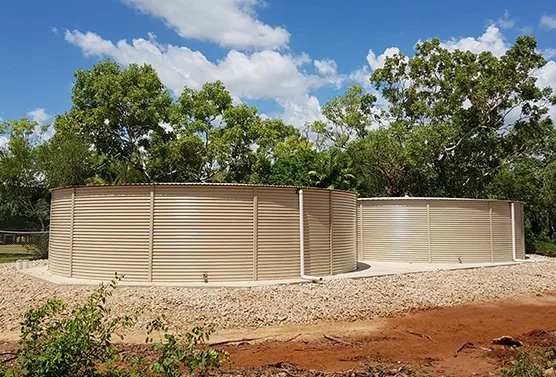
If you want to see what rainwater harvesting looks like when an entire country normalizes it, look at Australia. Roughly a third of all Australian households have a rainwater tank — around 2.9 million homes — and about 767,000 of them rely on rainwater as their main source of drinking water. That's well over a million people drinking off their roofs every day.
The rural numbers are even more striking. Outside the capital cities, nearly half of all homes have a tank, about one in five households drinks rainwater as their primary source, and rainwater supplies roughly two-thirds of all residential water used in rural Australia. In rural South Australia — the driest state on the driest inhabited continent — tank ownership runs as high as 86% of households.
By some measures, rainwater is the third-largest source of water in the entire country, behind only surface reservoirs and groundwater. In Adelaide, it's simply how water works. Our goal is to help make it that ordinary everywhere else.
Hawaii: an established way of life on catchment
Then there's Hawaii, where rainwater isn't a backup plan — for tens of thousands of people, it's the primary one. An estimated 30,000 to 60,000 residents, mostly on the Big Island in districts like Puna and the areas south of Hilo, depend on rainwater catchment for their household and drinking water. These aren't small setups, either. A typical Big Island catchment home runs a 10,000- to 30,000-gallon tank fed off a metal roof, treated through sediment and carbon filters and finished with UV sterilization for potable use. It's a normal way to run a household, and it has been for generations.
So what does it actually take for your roof?
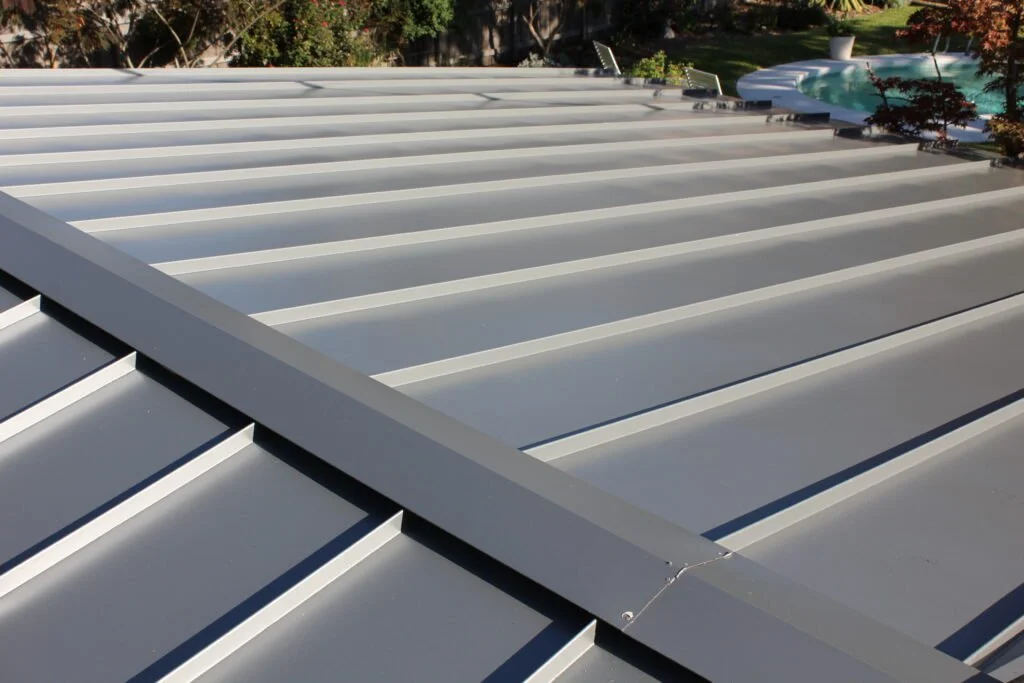
Whole-home, 100% rainwater comes down to four things working together:
A good catchment surface. A metal roof is the gold standard — clean, smooth, and ideal for collecting potable water. Square footage and your local rainfall set your ceiling. Run the numbers with the rainwater calculator before anything else.
Enough storage to ride out the dry spells. Rain doesn't arrive on a schedule. The tank is what carries you from a wet spring through a hot, dry August. Storage is where firm yield is won or lost, and it's usually the single biggest line item in the system.
Proper filtration and disinfection. For drinking water, the non-negotiables are sediment and carbon filtration, and UV sterilization. With that chain in place, the water meets or beats the standards used for municipal supply. We stock these as individual components and full kits.
Maintenance. Filters get changed, UV bulbs get replaced annually, the tank gets checked. This is the part DIYers most often underestimate and the reason we offer ongoing service plans for Texas systems — so the thing that keeps your family's water safe never falls off your to-do list.
The honest caveats
A rainwater system is only as reliable as it's designed to be. Undersize the tank or oversize the household and you can run short in a severe drought — which is exactly why firm-yield modeling exists, so you build for the worst year rather than the average one. A neglected system can develop water-quality problems, the same as a neglected well. And the upfront cost of a whole-home potable system in Texas typically runs in the tens of thousands, though it offsets years of water bills, the cost and uncertainty of well drilling, and rising municipal rates.
Setting matters, too. In cities, whole-home rainwater can be harder to implement — permitting requirements vary from one municipality to the next, and smaller urban lots often don't leave room for the storage a full potable system needs. That's why our focus for whole-home potable is mainly rural residential properties, including homeowners looking to transition off an aging or unreliable well. For homes inside city limits, a partial or supplemental system is often the more realistic fit.
The bottom line
Can your roof supply 100% of your home's water? In most of the country, with a sound design, the answer is yes. The math is straightforward, the research supports it, and millions of people across Texas, Australia, Hawaii, and beyond are already proof. Every time it rains, your roof can catch thousands of gallons of clean water — and with the right system, that water can supply your entire home.
If you want to know what your specific roof can do, try the rainwater calculator, and if you're in Texas and ready to talk specifics, get in touch with our team. We'll map out the right path, whether that's a full install, a DIY kit, or just a few honest answers.
